Do Babies Need Shoes When Learning to Walk? What Experts Recommend
One of the most common questions parents ask when their baby begins standing and taking those first wobbly steps is:
Do babies need shoes when learning to walk?
The surprising answer from many pediatric experts is no — babies usually learn to walk best without shoes.
Bare feet actually help babies develop balance, coordination, and strong foot muscles during the early walking stage.
But while barefoot is best indoors, there are times when babies do need shoes — especially when they begin exploring the world outside.
Let’s break down what parents should know.
Why Babies Learn to Walk Best Barefoot
When babies walk barefoot, their feet can move naturally and feel the ground beneath them.
This sensory feedback helps babies learn how to balance and adjust their movements.
Walking barefoot helps babies:
✔ develop stronger foot muscles
✔ improve balance and coordination
✔ strengthen their arches naturally
✔ learn how to grip the floor with their toes
Because babies’ feet are still developing, their bones and joints are very flexible.
Barefoot movement allows their feet to grow and develop the way nature intended.
That’s why many pediatricians recommend letting babies practice walking barefoot at home whenever possible.
When Do Babies Actually Need Shoes?
Shoes become necessary when babies start walking outside the home.
While barefoot is great indoors, outdoor surfaces can expose little feet to:
-
sharp objects
-
hot pavement
-
cold temperatures
-
rough terrain
At that point, shoes act as protection, not support.
The goal of early walking shoes should be to protect the foot without restricting natural movement.
What to Look for in First Walking Shoes
Not all baby shoes are created equal.
Many traditional shoes are stiff, narrow, and heavily structured, which can limit how babies move.
Instead, experts recommend choosing flexible shoes designed to mimic barefoot walking.
Here are the most important features to look for.
Wide Toe Box
Babies’ toes naturally spread out when they walk.
Shoes that are narrow or pointed can squeeze the toes together, which may interfere with natural foot development.
A wide toe box allows toes to move freely and helps children maintain better balance.
Flexible Soles
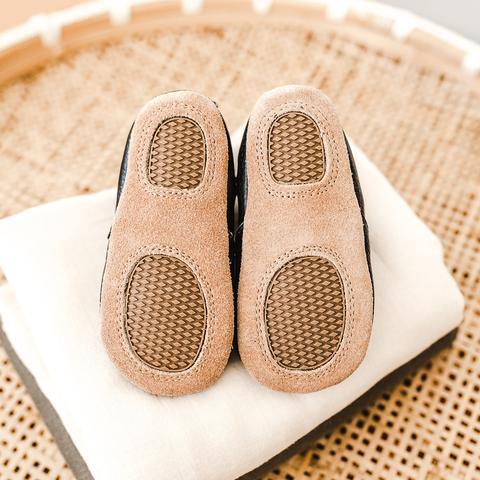
First walking shoes should bend easily.
If a shoe is stiff, it can make it harder for babies to learn how to move their feet properly.
Flexible soles allow babies to:
-
feel the ground
-
move naturally
-
strengthen their muscles while walking
You should be able to bend the shoe easily with your hands.
Lightweight Materials
Heavy shoes can make walking harder for babies who are still learning.
Lightweight shoes allow babies to move more naturally and comfortably.
The lighter the shoe, the easier it is for babies to explore and build confidence.
Zero-Drop Design
“Zero drop” simply means the heel and toe sit at the same level.
This allows babies to stand and walk in a natural, balanced position, similar to walking barefoot.
Shoes with elevated heels can shift a child’s posture and balance.
Signs Your Baby Is Ready for Their First Shoes
Many parents wonder exactly when it’s time to introduce shoes.
Your baby may be ready for their first pair when they:
✔ begin walking independently
✔ start exploring outdoors regularly
✔ need protection from rough surfaces
Until then, soft socks or barefoot time indoors are usually best.
Supporting Healthy Foot Development
During the first few years of life, children’s feet grow rapidly.
In fact, a baby’s foot contains mostly cartilage, which gradually develops into bone as they grow.
Because of this, it’s important to choose footwear that allows the foot to grow and move naturally.
Shoes that are:
-
too tight
-
too stiff
-
too narrow
can sometimes restrict natural movement.
Many parents today choose foot-shaped shoes designed specifically for growing feet, which prioritize flexibility and natural movement.
The Bottom Line
Babies do not need shoes to learn how to walk.
In fact, walking barefoot indoors is one of the best ways to help babies develop strong, balanced movement.
However, once babies begin exploring outdoors, shoes become important for protecting their feet.
The best first walking shoes allow babies to move as naturally as possible while still providing protection.
Choosing lightweight, flexible, and foot-shaped shoes can help support healthy foot development.