Baby & Toddler Shoe Size Chart by Age (2026 Guide)
One of the most common questions parents ask is:
“What shoe size should my baby or toddler wear?”
Children’s feet grow quickly during the early years, which means shoe sizes change more often than many parents expect. Finding the right fit is important not only for comfort but also for healthy foot development.
This guide includes a baby and toddler shoe size chart by age, along with tips for measuring your child’s feet and knowing when it’s time to size up.
Why Proper Shoe Fit Matters for Kids
Children’s feet grow rapidly during the first few years of life. In fact, a child’s foot can grow half a size every few months.
Shoes that are too tight can restrict movement, while shoes that are too large can make it harder for children to walk comfortably.
A properly fitting shoe should:
✔ leave a small amount of space for growing toes
✔ allow toes to spread naturally
✔ bend easily with your child’s movement
Many parents today look for flexible, foot-shaped shoes that allow children’s feet to move naturally while protecting them outdoors.
Baby Shoe Size Chart (0–12 Months)
Babies grow quickly, and their shoe size may change several times during their first year.
| Age | US Shoe Size | Foot Length |
|---|---|---|
| Newborn | 0–1 | 3.1–3.5 in |
| 0–3 months | 1 | 3.5 in |
| 3–6 months | 2 | 3.75 in |
| 6–9 months | 3 | 4.125 in |
| 9–12 months | 4 | 4.5 in |
Most babies do not need structured shoes during this stage unless they are walking outdoors. Soft socks or soft-soled shoes are usually sufficient.
Toddler Shoe Size Chart (1–4 Years)
Once babies begin walking independently, they often transition into toddler shoe sizes.
| Age | US Shoe Size | Foot Length |
|---|---|---|
| 12–18 months | 5 | 4.75 in |
| 18–24 months | 6 | 5.125 in |
| 2 years | 7 | 5.5 in |
| 2–3 years | 8 | 5.75 in |
| 3 years | 9 | 6 in |
| 3–4 years | 10 | 6.25 in |
Because toddlers grow quickly, many parents find themselves sizing up every 3–4 months.
Kids Shoe Size Chart (4–8 Years)
As children grow, their shoe sizes begin changing slightly more slowly.
| Age | US Shoe Size |
|---|---|
| 4–5 years | 10–11 |
| 5–6 years | 12 |
| 6–7 years | 13 |
| 7–8 years | 1–2 |
These sizes are approximate since every child’s growth pattern is different.
How to Measure Your Child’s Foot at Home
Measuring your child’s feet at home is easier than many parents realize.
Step 1
Place a piece of paper flat on the floor against a wall.
Step 2
Have your child stand with their heel against the wall.
Step 3
Mark the longest point of the foot on the paper.
Step 4
Measure the distance from the wall to the mark.
This measurement helps you determine your child’s current shoe size.
Most experts recommend leaving about a thumb’s width of space between the longest toe and the front of the shoe.
Signs Your Child Needs New Shoes
Because children may not always express discomfort clearly, parents should look for signs that shoes may no longer fit properly.
Common signs include:
✔ red marks on the feet
✔ toes pressing against the front of the shoe
✔ frequent tripping or imbalance
✔ difficulty putting shoes on
✔ your child refusing to wear their shoes
Children’s feet grow quickly, so it’s helpful to check their shoe size every 3–4 months during toddlerhood.
What to Look for in Kids Shoes
Choosing the right shoes can help support healthy foot development as children grow.
Many experts recommend shoes that allow kids’ feet to move as naturally as possible.
Important features to look for include:
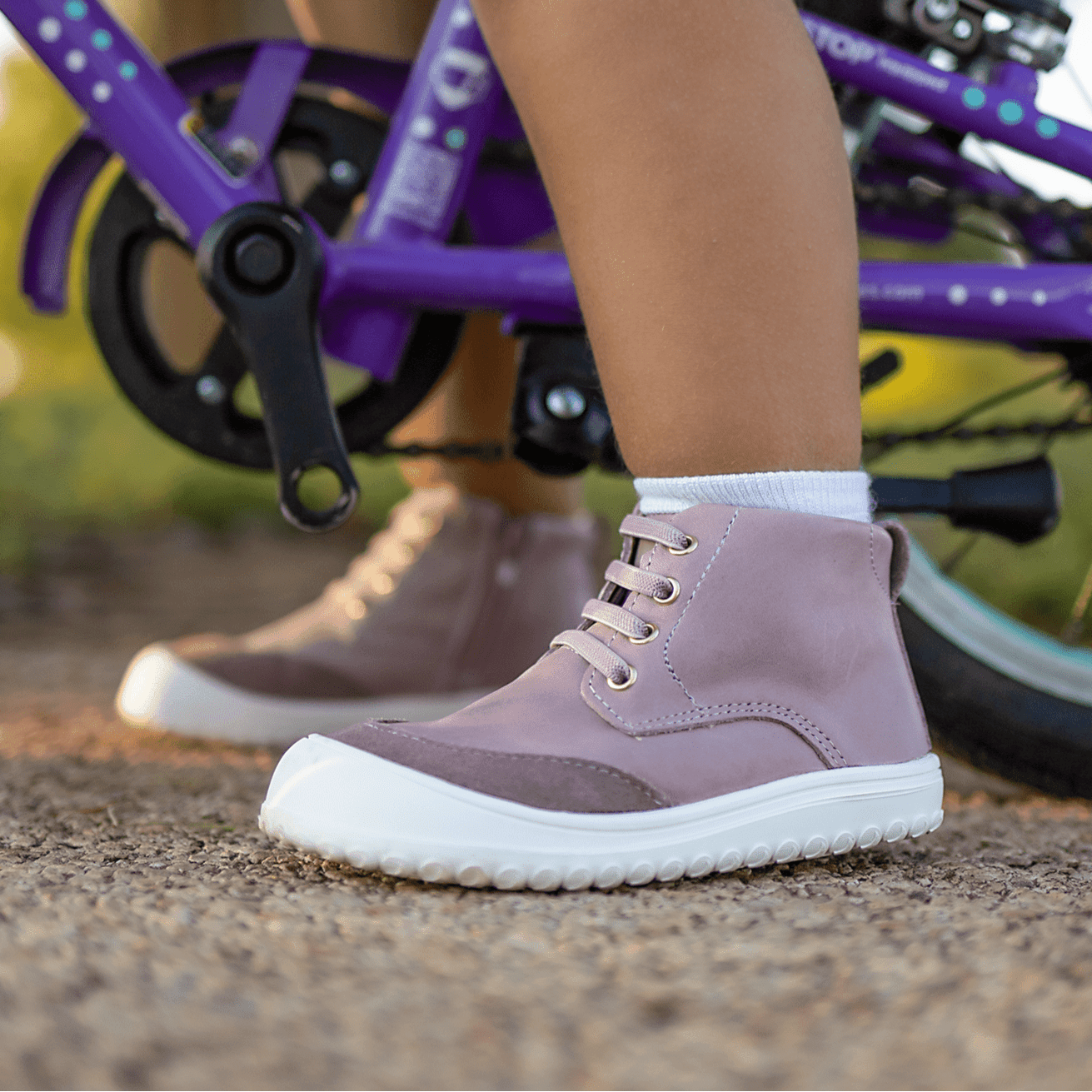
✔ Wide toe boxes that allow toes to spread naturally
✔ Flexible soles that bend easily when walking
✔ Lightweight materials that do not restrict movement
✔ Zero-drop soles that keep feet level and balanced
Shoes designed with these features help children move comfortably while exploring, walking, and playing.
Do Babies Need Shoes When Learning to Walk?
Many pediatric experts recommend letting babies practice walking barefoot indoors, since this helps develop balance and foot strength.
Shoes are typically introduced when children begin walking outside, where footwear helps protect their feet from rough or hot surfaces.
When choosing first walking shoes, flexible and lightweight designs are usually the best option.
How Often Should Kids Get New Shoes?
Children’s feet grow rapidly, especially during the first few years.
A general guideline is:
-
babies: check every 2–3 months
-
toddlers: check every 3–4 months
-
young children: check every 4–6 months
Regularly checking your child’s shoe size helps ensure they always have room to grow and move comfortably.
Supporting Healthy Steps
Watching your child learn to walk, run, and explore the world is one of the joys of parenthood.
Making sure their shoes fit properly helps support comfortable movement and healthy development.
When shoes allow children’s feet to move naturally, they can explore confidently as they grow.
And those growing feet?
They’re carrying your little one into a world full of adventures.