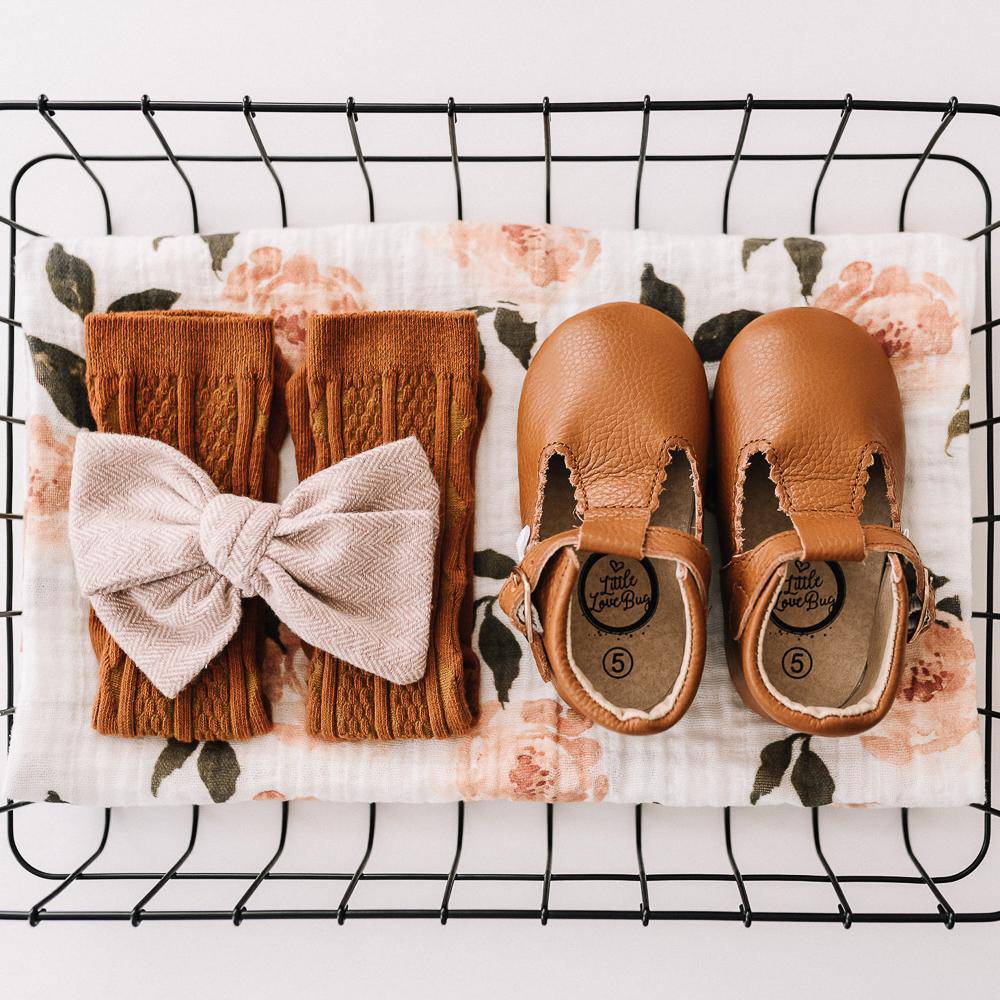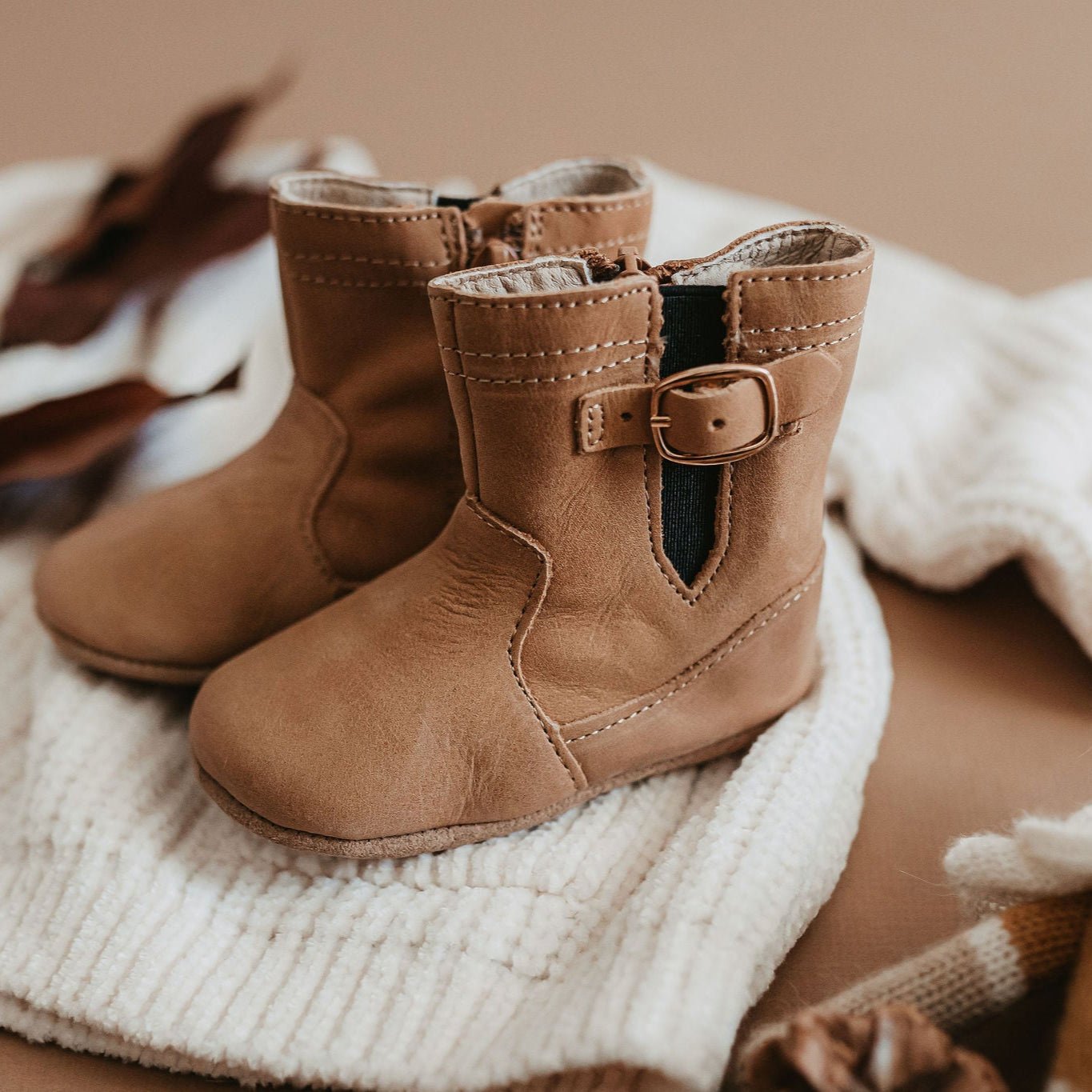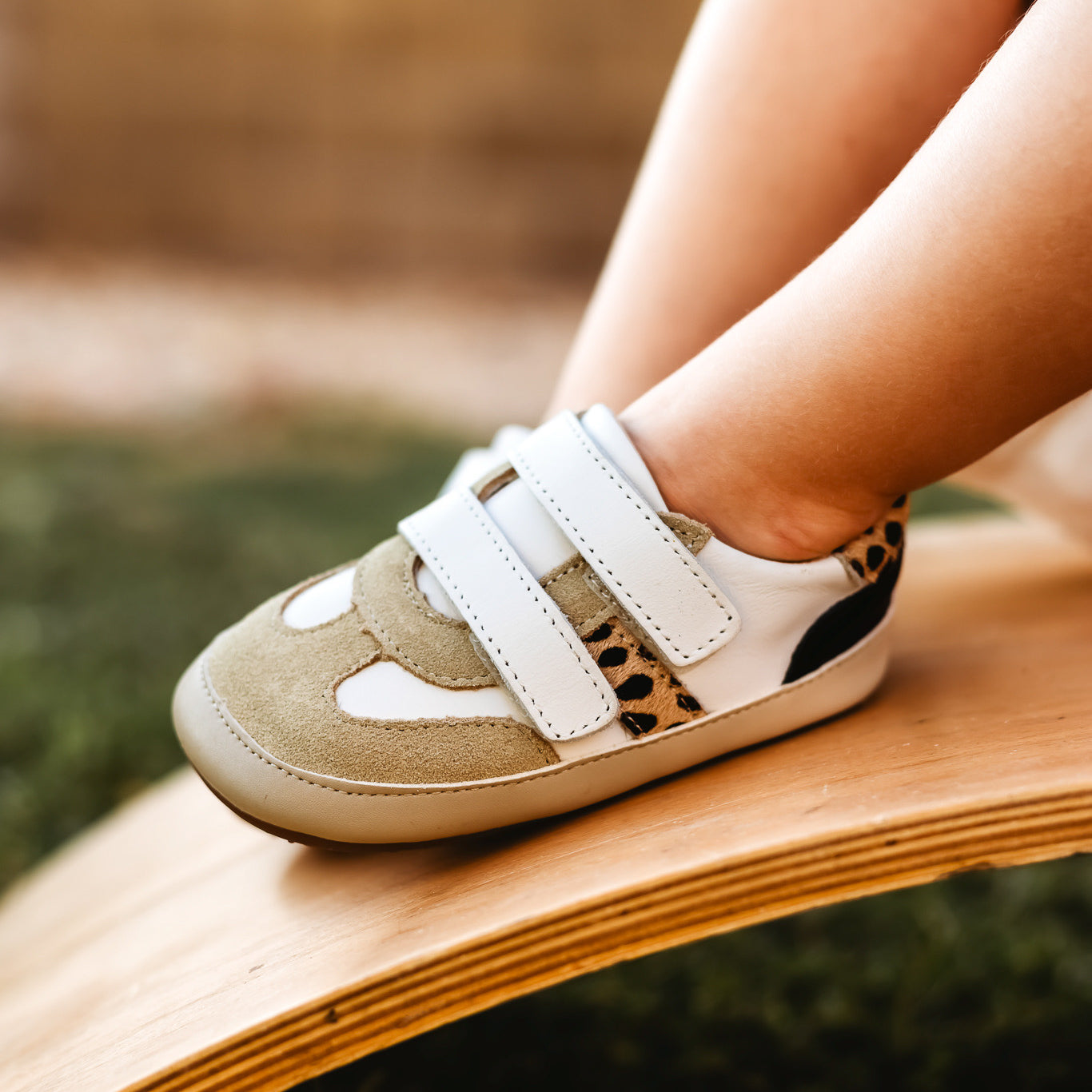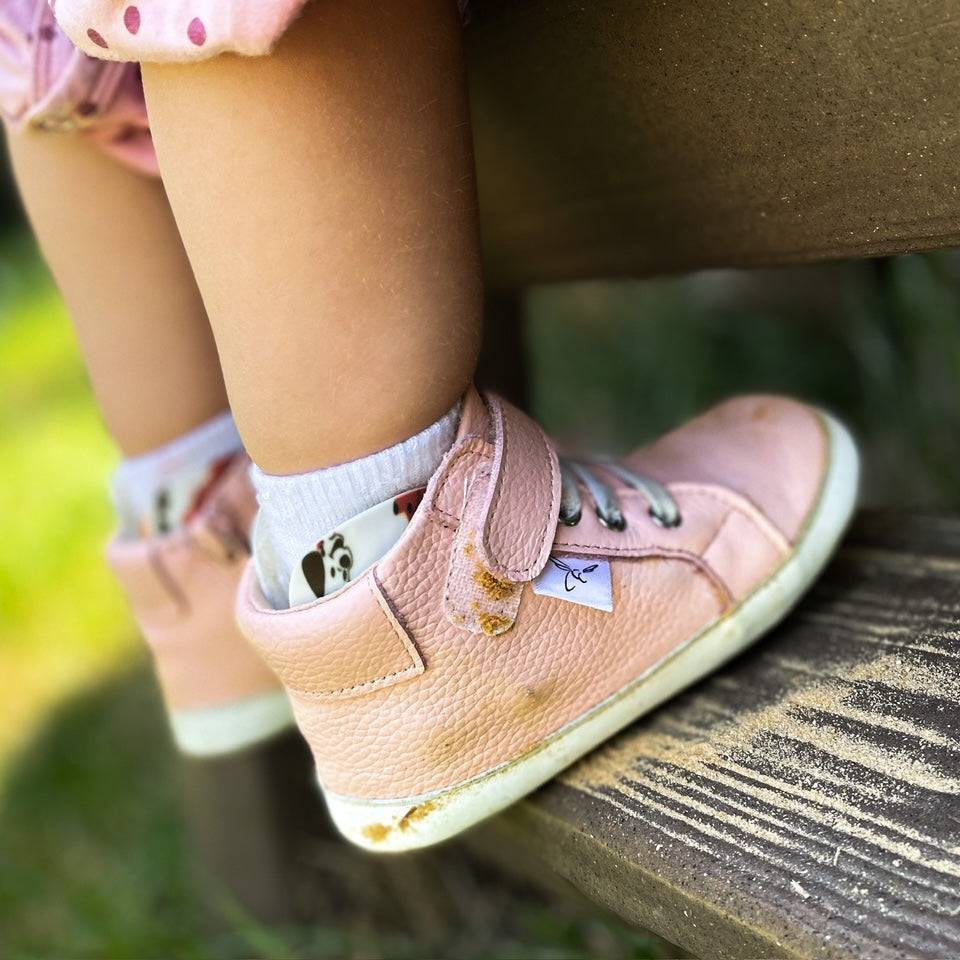
When Should Babies Start Wearing Shoes? 5 Key Facts Every Parent Needs to Know
As a parent, it’s easy to get caught up in adorable baby shoes (we see you, tiny glitter boots 👀). But when should your baby actually start wearing shoes?
The answer might surprise you.
Pediatricians and child development experts agree that less is more when it comes to infant footwear. In fact, the best shoe for a baby just learning to walk is no shoe at all. In this post, we’ll explore the top five things every parent should know about when to introduce shoes, how to support healthy foot development, and what type of shoe is best when it’s time to buy.
Let’s get into it.
1. Going Barefoot Boosts Foot Development
Your baby’s feet aren’t just small. They’re soft, pliable, and still developing. At birth, they contain 26 bones, 33 joints, and over 100 muscles and ligaments, all of which are growing and adapting with every wiggle, crawl, and step.
Going barefoot helps:
- Strengthen foot muscles and ligaments
- Develop balance and coordination
- Promote proper arch formation and gait
Being barefoot also allows your baby to get critical sensory feedback through the soles of their feet. This feedback helps them understand textures, surfaces, and movement. It’s one of the reasons barefoot walking is highly encouraged during early milestones.
So if your baby is cruising around the living room, skip the shoes and let those toes spread wide.
2. The Best Baby Shoes Mimic Barefoot Walking
Once your baby starts walking outdoors, it’s time to protect those feet. But don’t jump straight to structured shoes with stiff soles.
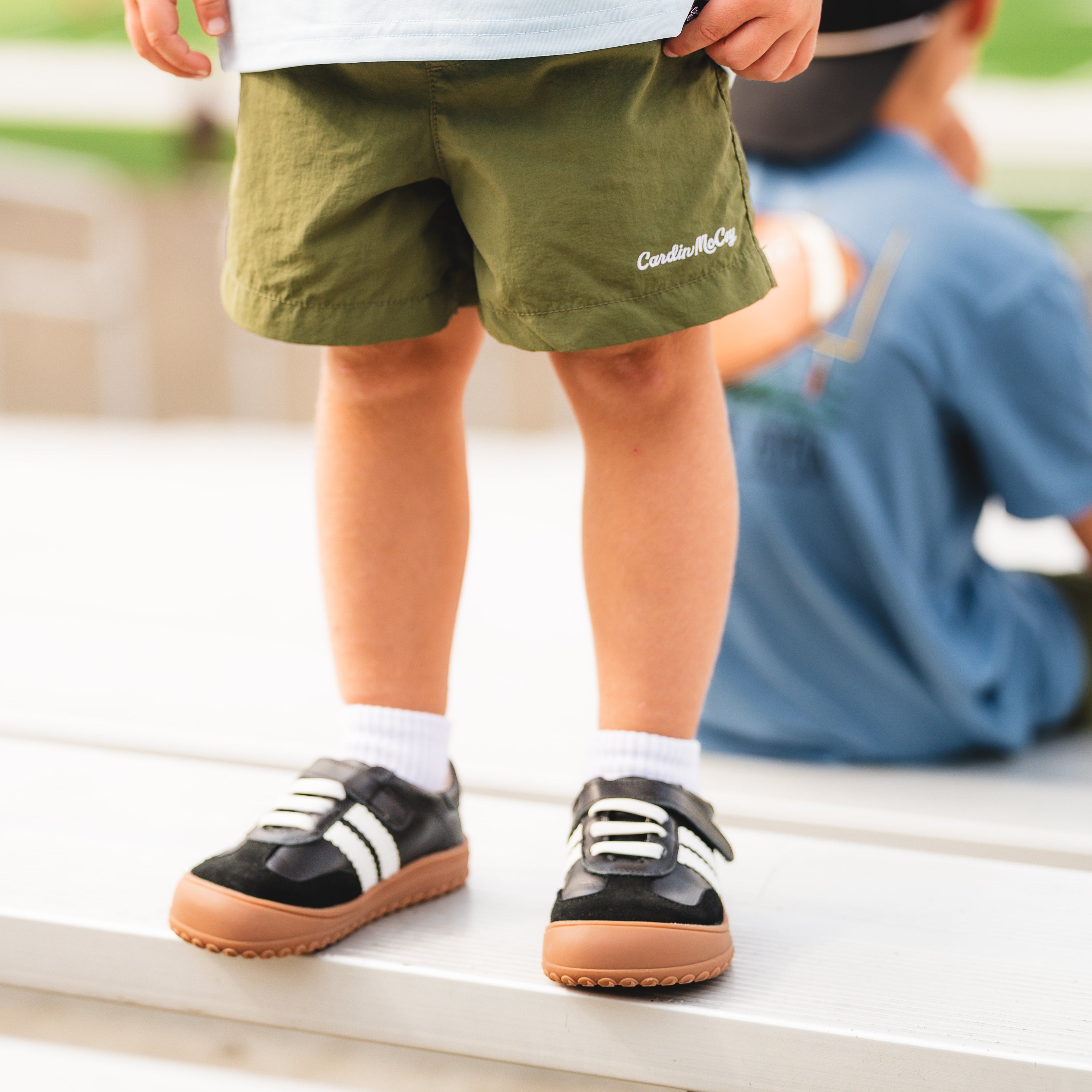
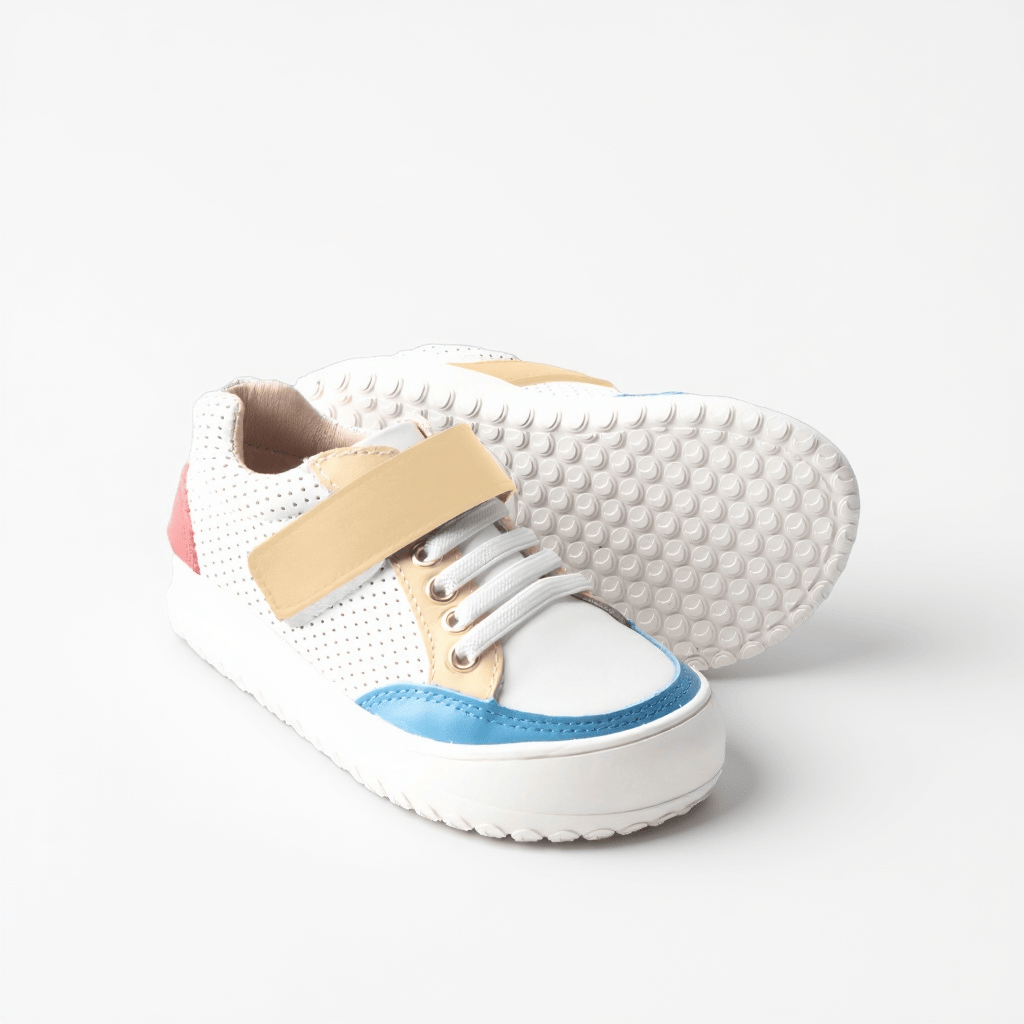
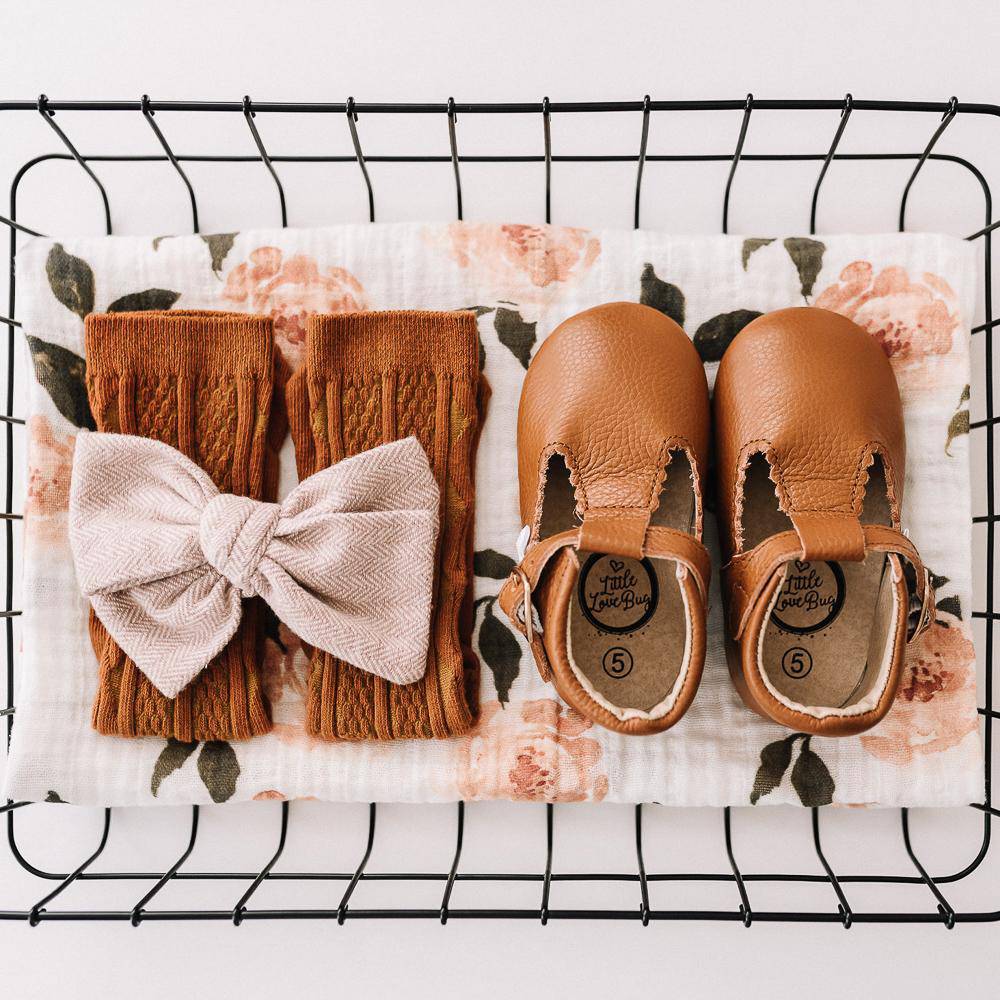
Instead, look for soft soled baby shoes with a wide toe box and zero drop soles. These features allow your little one’s feet to move naturally without restricting growth or flexibility.
Here’s what to look for:
- Wide toe box that encourages toes to splay for balance
- Zero drop soles that keep heel and toe level for natural posture
- Flexible soles that help feet grip the ground and develop strength
Shoes that mimic barefoot walking can support your baby’s development while still offering gentle protection.
3. Wait Until Walking to Introduce Shoes Outside
So, when should babies wear shoes?
According to the American Academy of Pediatrics, babies don’t need shoes until they’re walking confidently outdoors. Inside the home, barefoot or socks with grip are perfectly fine.
Most babies begin walking between 9 to 18 months. Look for signs your little one is walking steadily before introducing daily shoes.
When you do begin shopping, choose shoes that are:
- Lightweight and breathable
- Easy to put on, like Velcro or slip-on styles
- Designed for natural movement and comfort
The goal is to protect your child’s feet while supporting continued development without restriction.
4. Avoid Stiff, Hard-Sole Shoes Too Early
Hard-soled shoes may look durable, but they’re often too restrictive for early walkers. They can make it harder for babies to grip the ground, feel textures, or shift their weight properly.
Early use of stiff shoes may contribute to issues such as:
- Poor balance and coordination
- Flat feet or delayed arch development
- Toe-walking or altered gait
Soft soles with slight traction are a better choice until your child becomes a confident walker outdoors.
5. Fit Matters More Than Fashion
We know it’s tempting to grab the cutest shoes off the shelf, but fit is everything when it comes to your baby’s first pair of shoes.
Ill-fitting shoes can lead to blisters, tripping, or even long-term foot deformities.
Here’s what to look for:
- A thumb’s width between the big toe and the shoe tip
- A secure fit at the heel without slipping
- Enough room for toe splay
- Materials that are soft, breathable, and flexible
If your baby curls their toes or resists walking in the shoes, it may be a sign they are uncomfortable. When in doubt, ask your pediatrician or visit a children’s shoe specialist for help with sizing.
Bottom Line Comfort and Foot Freedom Come First
Your baby’s feet are the foundation for their entire movement journey. Letting them explore the world barefoot or in flexible soft soles is one of the best ways to encourage healthy development.
Resist the urge to grab structured shoes too soon. Let those toes breathe, grow, and splay wide as nature intended.
When it’s time for shoes, opt for soft soles with a wide toe box and zero drop. Check the fit regularly, because your baby’s feet grow fast.
At Little Love Bug Company, we believe in giving kids the freedom to explore without restrictions. Our barefoot shoes are made with soft, durable materials that move with your child’s feet, not against them. Whether they’re splashing in puddles, climbing at the playground, or running through a field of wildflowers, our shoes let them feel the world beneath their feet…just as nature intended.
So, if you’re ready to give your little one the best foundation for movement, check out our latest collection of barefoot shoes. Trust me, once you see the difference, you’ll never go back!
👉 Shop Now & Let Their Feet Explore Freely!
What’s your toddler’s favorite outdoor activity? Drop a comment below—We’d love to hear all about their little adventures! 💛
Frequently Asked Questions
1. What are barefoot shoes, and how are they different from regular kids’ shoes?
Barefoot shoes are designed to mimic the feeling of walking barefoot while still providing protection. Unlike traditional kids' shoes, which often have stiff soles and thick cushioning, barefoot shoes have:
✅ Flexible, thin soles that allow for natural foot movement
✅ Wide toe boxes to let little toes spread and grow properly
✅ Zero-drop soles (flat from heel to toe) for better posture and balance
2. Are barefoot shoes good for first walkers and toddlers?
Absolutely! Barefoot shoes are actually one of the best choices for first walkers because they allow a baby’s feet to develop naturally. Toddlers learn to balance, grip the ground, and move more confidently when their feet are unrestricted.
Many pediatricians and podiatrists recommend soft, flexible shoes for little ones just learning to walk. Barefoot shoes provide just enough protection while still letting them feel and connect with the ground beneath them.
3. Do kids need arch support in their shoes?
Nope! This is a common misconception. Babies and toddlers are born with flat feet, and their arches naturally develop over time as they walk, run, and strengthen their foot muscles.
Overly supportive shoes can actually weaken the muscles that are supposed to develop arches naturally. That’s why barefoot shoes are designed to let kids' feet move and grow without restriction, helping them build strong, healthy arches over time.
4. Can my child wear barefoot shoes in all seasons?
Yes! Barefoot shoes come in a variety of styles for year-round wear. In warmer months, lightweight and breathable options keep little feet cool and comfortable. For fall and winter, there are lined and water-resistant barefoot shoes that keep feet warm without compromising flexibility.
Plus, many parents love layering with wool socks for extra warmth while still allowing for a full range of motion in colder months.
5. Will my child’s feet get stronger from wearing barefoot shoes?
Yes! Wearing barefoot shoes allows kids to use their feet the way nature intended—gripping, balancing, and strengthening muscles with every step. Over time, this helps improve:
✅ Foot strength and muscle development
✅ Better posture and balance
✅ More natural movement and coordination
Many parents notice their kids become more confident and agile when wearing barefoot shoes because their feet are free to move naturally.
This design helps strengthen foot muscles, improve coordination, and support healthy development, perfect for growing toddlers and active kids!
Learn more about why barefoot shoes are important for child foot development:
Scholarly Source:
How barefoot and conventional shoes affect the foot and gait characteristics in toddlers
Gimunová M, Kolářová K, Vodička T, Bozděch M, Zvonař M (2022) How barefoot and conventional shoes affect the foot and gait characteristics in toddlers. PLOS ONE 17(8): e0273388. https://doi.org/10.1371/journal.pone.0273388